
Clients ask me this in the car, between the second viewing and the third, and they expect a list of names. I never have one ready — the useful answer is not a list. Where you eat in Marbella depends on the month, the hour and which part of the municipality you are standing in.
So this is not a ranking. It is how eating works for the people who live here — when the town sits down, what changes between the old quarter, the marina and the sand — and why I treat it as a property question.
The clock, and the meal in the middle of it
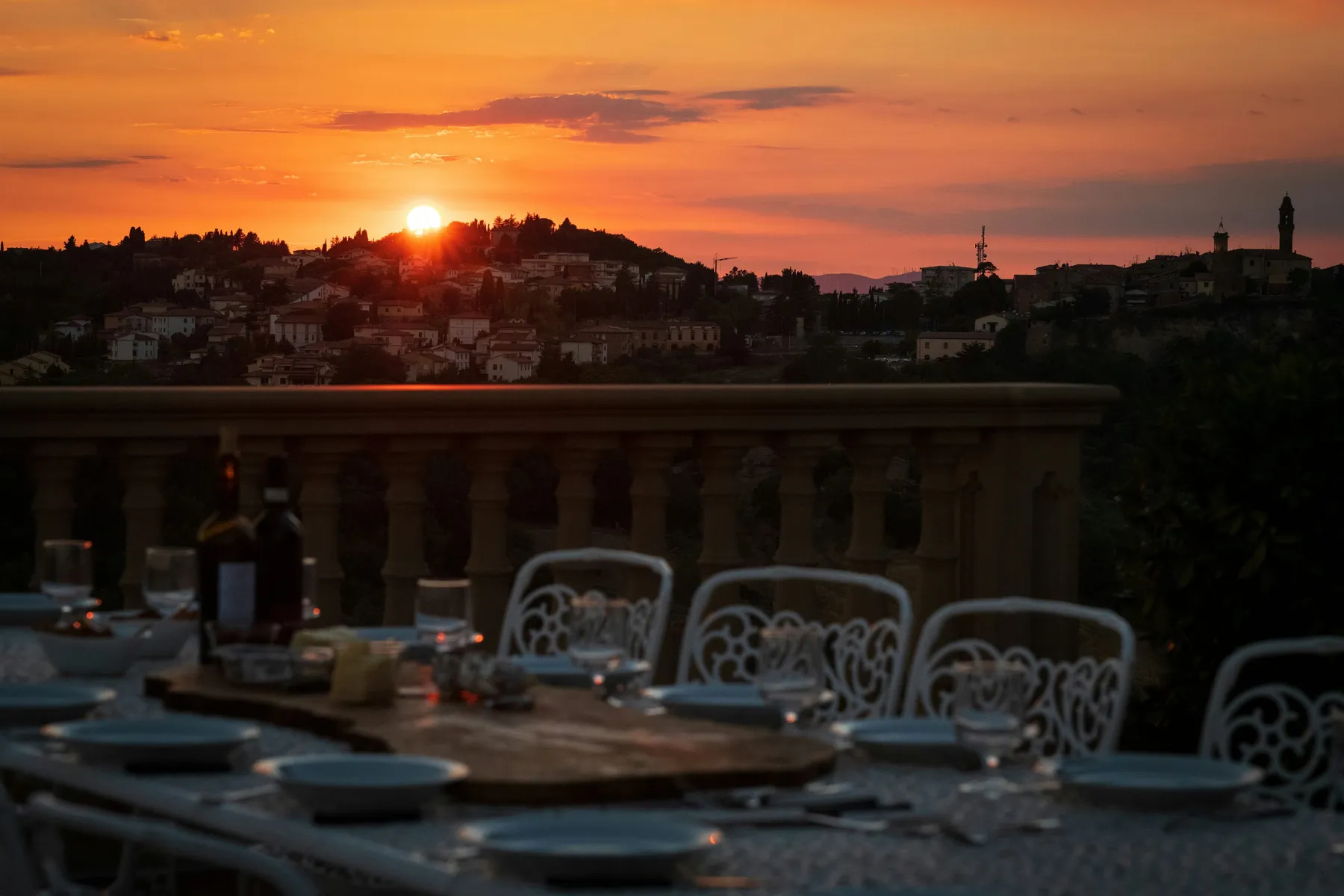
The hard adjustment is not the food, it is the timetable. Lunch is the meal with weight in it and begins later than most northern Europeans expect; the evening service fills at an hour when kitchens in Amsterdam are already being scrubbed. Every summer I meet a family who sat down early on their first night, found a half-empty room and decided the place was dead. They had arrived before the town did.
That clock changes the shape of a day, not just the hour of a meal: the middle of the day is a real stop, and children are still at the table when a visitor would expect them in bed. Move your own day an hour or two later and the friction goes.
The most useful meal here is the set lunch, the menú del día, which visitors miss because they are not hungry yet at that hour. It is compact — a first, a second, something to finish — and built for people going back to work afterwards. For a buyer it is the most honest hour there is: nobody performs a neighbourhood at half past two on a Wednesday.
Geography decides where you find it. San Pedro de Alcántara, laid out on a grid with a genuine high street, still has a butcher on that street and still eats at midday the way a Spanish town does. Nueva Andalucía, behind the port, keeps a restaurant trade open in January because its customers live in the valley rather than visit it.
Three Marbellas, three ways of eating
In Marbella Old Town you eat at walking pace because nothing else is possible: the quarter is dense, largely pedestrian, and the kitchen you want is down a lane no car enters. What I watch there is the order in which a square fills. Plaza de los Naranjos takes in people who live nearby before anyone else, and the tables busy in that first hour are the ones I would book. The casco antiguo also has a winter, which the beach strips do not.
Puerto Banús is a different discipline. In July and August the quayside is a spectacle until the small hours and you eat inside that, whether you came for it or not. Out of season the same horseshoe is a neighbourhood where two or three restaurants stay open, and those are what is worth knowing. On the Golden Mile the hotels carry the winter: the Marbella Club and Puente Romano stay open and do duty as the strip’s local restaurant.
Then the sand, where the coast is most itself and least documented. A chiringuito is a room without walls where lunch can take the whole afternoon, and most appear on no list at all: the town hall’s own beach pages are a better guide than a review site. On the sand at Los Monteros they record El Kiosko Kite Surf and El Mangaleta, and no client has said either name to me before arriving.
Any street on this coast is charming in August. Ask it what it does on a Tuesday in February.
August is not the year
August flatters everything: whoever visits only then goes home with the place at maximum volume. February shows the other end of the range — the beach strip at Elviria falls quiet while the supermarkets and bakeries on the old coast road stay open, because people live behind them all year. Neither month is lying, and you are buying both.
The distinction that matters is between quiet and shut. The Golden Mile in February is quiet, not closed. A block of holiday lets on a seafront strip is closed, and you can see it from the pavement: no lights, no bins out, no cars. Out of season I am not showing the disappointing version of an area, but the one they would own.
Why ‘where do you eat’ is really a property question
The question underneath is nearly always whether the neighbourhood is alive when the season is not. A kitchen has no sentiment in it: it opens where there are enough people to feed in January and closes where there are not. So a street with kitchens trading in winter has residents; a street of shuttered terraces has visitors, and everything follows from that.
I would not lean on it alone: a quiet residential hillside is quiet by design, and a loud terrace under your bedroom window is an argument against that flat rather than the street. Where a home has a commercial unit beneath it, the terrace licence and its permitted hours are a municipal matter — have your own abogado check what is licensed there.
What I ask clients to do with a few days here costs nothing and teaches more than another viewing.
- Eat lunch in the neighbourhood on a weekday, at the hour it eats rather than when you are hungry.
- Come back after dark and walk from where you would park to the door.
- Turn up when the area is busiest — the Saturday market at the old bullring in Nueva Andalucía, the Thursday market in San Pedro.
- Ask whoever serves you what stays open in January; nobody in that job has reason to lie.
- If the calendar allows it, come back once in a month that is not August.
Come and do it with us
I would rather do this with you than write it down. Tell me which month you are coming and what life you are building here — school runs or sailing, a winter or a fortnight in summer — and I will say honestly which neighbourhoods hold up then. We will build the trip around a couple of meals instead of a spreadsheet. WhatsApp, telephone and email are on this site; the free guides cover the paperwork.